PA-Licensed · Free Estimates Available
Asbestos Removal in Chester & Delaware County, PA
Asbestos removal in Chester and Delaware County requires PA-certified contractors, containment, wet methods, HEPA clearance, and regulated disposal. ACI-TECH, INC. handles every step — call (610) 497-7162 for a free estimate.
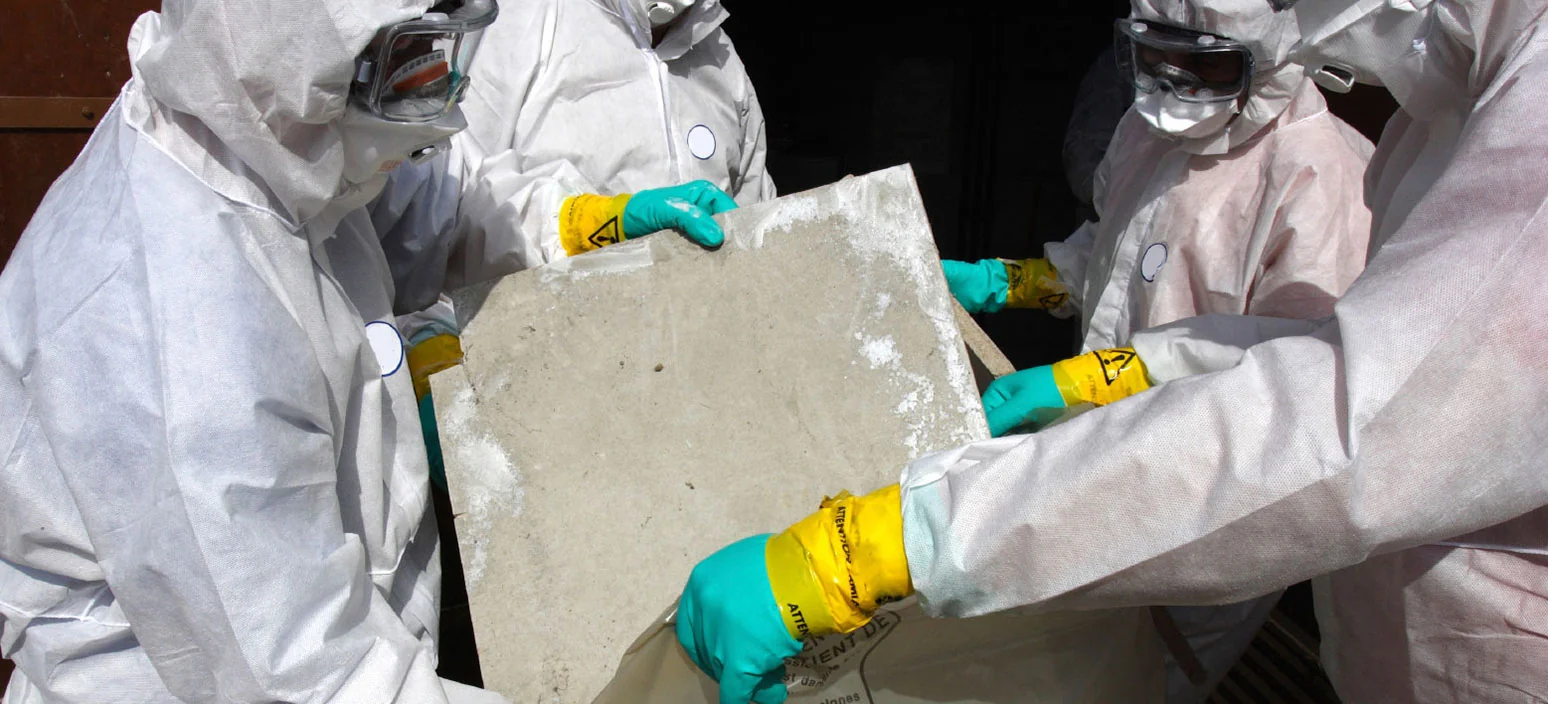
Recent work
Work we've done — asbestos removal
Scope of work
What does asbestos removal cover?
- Pipe insulation removal
- Floor tile and sheet vinyl abatement
- Spray-applied ceiling texture removal
- Boiler and duct insulation removal
- Attic loose-fill removal
- PA DEP NESHAP notification filing
- Regulated waste manifesting and transport
- Air clearance testing coordination
Our process
How does it work?
- Inspect and scope A PA-certified inspector documents all ACMs — what's present, where, and how much — before anything is touched.
- Contain the work area Plastic sheeting and HEPA exhaust fans create negative pressure so fibers can't escape into the rest of the building.
- Wet removal All material stays wet throughout removal using amended water — dry removal is never acceptable under PA law.
- HEPA decontamination Every surface in the containment zone is HEPA-vacuumed and wet-wiped after material is out.
- Air clearance testing An independent hygienist tests air quality; the space is not released for occupancy until samples pass.
- Regulated disposal Double-bagged, labeled waste goes to a PA DEP-permitted facility with full documentation.
Decision guide
When is asbestos removal required?
ACMs that are crumbling, torn, or releasing visible fibers are an active health hazard. OSHA defines friable material as anything that can be crumbled by hand pressure. Deteriorated pipe insulation, damaged ceiling texture, and broken floor tiles in this condition need to come out — not be patched over.
Pennsylvania law requires all ACMs in the work zone to be removed before any contractor begins renovation or demolition. The threshold for PA L&I notification is 3 linear or square feet of friable material. For larger projects, PA DEP NESHAP notification must be filed at least 10 working days in advance.
Buyers, lenders, and commercial property managers routinely require documented removal of known ACMs before closing. ACI-TECH's project completion reports with air clearance documentation satisfy this requirement.
Regulatory requirements
Pennsylvania notification requirements
Pennsylvania requires contractor certification and advance notification before asbestos removal work:
ACI-TECH files all required notifications to PA DEP and PA L&I as standard project management. You do not have to navigate the regulatory paperwork.
Cost guidance
What asbestos removal costs
Cost depends on material type, quantity, location, and accessibility. Pipe insulation in a crawl space costs more per linear foot than floor tile in an open basement. Spray-applied ceiling texture in a finished room requires more containment than an open basement. Total square or linear footage, access difficulty, and whether the project exceeds PA DEP NESHAP thresholds all affect the final price. ACI-TECH provides free written on-site estimates before any work begins — suitable for use in real estate negotiations and insurance claims.
Get a free written estimate →30 years of field experience
What We Find in Delaware Valley Homes
After thirty years of inspecting basements in Chester, Collingdale, Upper Darby, and the surrounding Delaware County boroughs, the material patterns are consistent. In a row home built between 1935 and 1952 with original steam heat, the pipe insulation is there — not sometimes, almost always. At the furnace takeoffs and elbows it is usually friable by now, even if the straight horizontal runs still look intact. Elbow joints absorb the stress of thermal expansion and contraction through decades of heating cycles, and the insulation cracks there first. If you have a 1940s row home with original steam heat and the pipe wrap has never been tested, budget for a positive result — it is the exception when we do not find it.
The 9×9 floor tiles are more variable by era. Pre-1955 renovations are almost always positive. 1960s renovations come back positive at a high rate. 1970s results are mixed — some manufacturers were still using chrysotile right up to the early 1980s. The black mastic adhesive beneath the tiles often tests positive independently, even when the tiles themselves test below the threshold.
The finding that surprises homeowners most often is joint compound in mid-century wall renovations. If a room was updated in the 1950s or 1960s — new drywall over plaster, or plaster repair — the compound on those seams is worth sampling before anyone starts opening walls. It does not look dangerous. It looks like drywall compound, because it is. But the formulations in use from roughly 1940 to 1977 commonly contained chrysotile, and once a wall is opened for a renovation, the contractor is working in the contaminated area regardless of what the compound looks like.
ACI-TECH holds PA L&I License C0238A (expires October 2027), Philadelphia Asbestos Abatement License ACL-387 (expires July 2027), and EPA Lead-Safe Firm certification NAT-43556-2. Jack Helms, President, has held these certifications continuously since the company's founding in 1995.
Asbestos removal is the physical process of taking asbestos-containing materials (ACMs) out of a building — cutting away pipe insulation, lifting floor tiles, stripping ceiling texture — and disposing of them as regulated hazardous waste. In Pennsylvania, any contractor performing this work must hold a current PA Department of Labor & Industry certification under Acts 194 and 161. ACI-TECH, INC. is a PA-certified asbestos removal contractor based in Chester, serving Delaware County, Philadelphia, and the surrounding region.
The Removal Process Step by Step
Professional asbestos removal follows a defined sequence. Each step exists to prevent fiber release during and after the work.
1. Pre-removal inspection and scope. Before any material is touched, a PA-certified inspector documents what’s present, where it is, and in what quantity. If you don’t already have an inspection report, ACI-TECH can provide one. See our asbestos testing services for details.
2. Negative-pressure containment. The work area is sealed off with plastic sheeting. HEPA-filtered exhaust fans create negative air pressure so that any airborne fibers are drawn out of the work zone rather than into the rest of the building. Adjacent spaces are isolated before the first piece of material is touched.
3. Wet methods throughout. Asbestos-containing material is kept wet during removal to suppress fiber release. Dry removal is not acceptable. Workers use amended water — water with a surfactant — to wet materials immediately before and during disturbance.
4. HEPA decontamination. After material is removed, all surfaces in the containment zone are HEPA-vacuumed and wet-wiped. Standard shop vacuums and household vacuums pass asbestos fibers straight through — only HEPA-rated equipment is adequate.
5. Air clearance testing. An independent industrial hygienist collects air samples after cleanup is complete. The work area is not released for occupancy until fiber counts fall below the clearance threshold. ACI-TECH coordinates the clearance test as part of every project.
6. Regulated waste disposal. Removed material is double-bagged in labeled, sealed bags and transported to a PA DEP-permitted disposal facility. ACI-TECH handles all waste manifesting and transport documentation.
Where We Work
- Chester, PA — pipe insulation, floor tile, and attic insulation removal in pre-1940 row homes
- Delaware County, PA — 49 municipalities served; pre-war and postwar housing stock
- Collingdale, PA — steam pipe and boiler insulation removal in 1890s–1950s row homes
- Darby, PA — coal boiler conversion and pipe insulation removal
- Folcroft, PA — postwar floor tile, acoustic tile, and duct insulation removal
- Lansdowne, PA — Victorian twin steam pipe and floor tile removal
- Ridley Park, PA — Victorian, Craftsman, and postwar material removal
- Sharon Hill, PA — 1935–1955 peak-era pipe insulation and floor tile removal
- Upper Darby, PA — high-density row home and twin removal projects
- Wayne, PA — Chesterbrook borderline-era flooring and duct tape removal; pre-war Main Line projects
- Philadelphia, PA — row home pipe insulation, transite flue pipe, and floor tile removal
- Montgomery County, PA — Main Line and industrial borough removal projects
- Chester County, PA — Victorian borough and rural farmhouse removal
Where we work
Areas near you
Common questions
Asbestos Removal — Frequently Asked Questions
How much does asbestos removal cost in Pennsylvania?
Asbestos removal cost depends on material type, quantity, location, and accessibility. Pipe insulation in a crawl space costs more per linear foot than floor tile in an open basement. Projects above federal thresholds also require PA DEP NESHAP notification, which adds a filing step. ACI-TECH provides free written on-site estimates before any work begins — suitable for use in real estate negotiations.
Does Pennsylvania law require advance notice before asbestos removal?
Yes, for projects above federal thresholds. PA DEP NESHAP notification must be filed at least 10 working days before work begins on projects involving more than 260 linear feet of pipe insulation or 160 square feet of other material. PA L&I notification is required for contractor work disturbing more than 3 linear or square feet of friable material. ACI-TECH files all required notifications as part of standard project management.
What happens to the asbestos after it's removed?
Removed asbestos is double-bagged in labeled, sealed bags and transported to a PA DEP-permitted disposal facility — it cannot go in regular trash, a construction dumpster, or a municipal recycling bin. ACI-TECH handles all waste manifesting and transport documentation. You receive a project completion report documenting the waste chain of custody.
How do I know if gray pipe wrap in my basement is asbestos?
You cannot confirm it by sight alone — gray or white fibrous wrap on basement pipes in a pre-1980 home is one of the most common asbestos suspects, but only lab analysis of a physical sample confirms it. A PA-certified inspector collects a small sample with proper containment procedures and sends it to an NVLAP-accredited lab. Results typically return in one to three business days. Do not disturb the material until it is tested.
Can I renovate before getting asbestos removed?
No. Pennsylvania law requires all asbestos-containing materials in the work zone to be removed before any contractor begins renovation or demolition work that will disturb them. Starting renovation first violates PA L&I and PA DEP NESHAP requirements and creates a health hazard for all workers on site. An asbestos inspection and removal must be completed before the renovation contractor arrives.
Ready to get started? Free estimates, no obligation.
PA DEP licensed · EPA RRP certified · Serving Chester, Delaware County & Philadelphia