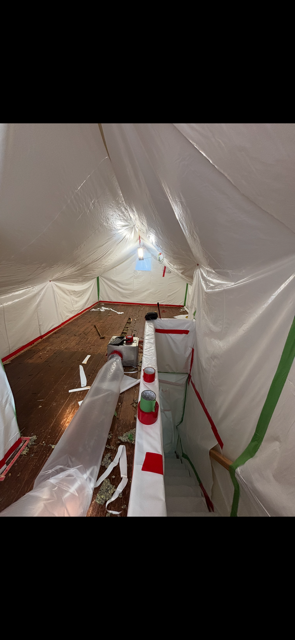
Lead-based paint is a cause for concern in pre-1978 homes because it creates lead-contaminated dust when it deteriorates, is disturbed during renovation, or is abraded by everyday friction — and that dust causes lead poisoning, particularly in children under 6. Intact lead paint in good condition is not an immediate hazard; the danger is what happens when it moves: through peeling, sanding, scraping, window sash friction, or door jamb wear.
The Department of Housing and Urban Development estimates 29 million homes nationwide still contain lead-based paint. In Delaware County and the Philadelphia area — where a large proportion of the housing stock predates 1960 — lead paint is not a historical footnote. The Delaware County Health Department documented 307 children with elevated blood-lead levels in 2022 and estimates 80% of county homes contain lead-based paint.
How Lead Gets from Paint into People
Lead paint causes health problems primarily through ingestion and inhalation of lead-contaminated dust and paint chips — not through touching painted surfaces. The pathways are:
- Household dust: Deteriorating lead paint generates lead-contaminated dust that settles on floors, window sills, counters, and furniture. Young children who play on floors and put their hands in their mouths are the highest-risk population.
- Paint chips: Peeling or flaking paint that young children can pick up and put in their mouths is a direct ingestion route.
- Renovation dust: Sanding, scraping, dry scraping, heat-stripping, or blasting lead-painted surfaces generates large quantities of lead dust. A single poorly controlled renovation can contaminate a home’s entire living area.
- Friction surfaces: Window sashes, door edges, and stair treads painted with lead paint continuously generate lead dust through normal use.
The CDC identifies no safe blood lead level in children. Even low-level lead exposure is associated with reduced IQ, attention deficits, behavioral problems, and impaired hearing. The effects are largely irreversible.
Health Effects in Children
The CDC’s reference value for elevated blood lead in children is 3.5 micrograms per deciliter — a level that triggers public health action. Children are more vulnerable to lead than adults because:
- They absorb a higher proportion of ingested lead (up to 50% compared to roughly 10% in adults)
- Their developing nervous systems are more susceptible to the neurotoxic effects
- Hand-to-mouth behavior is normal at the ages of peak risk (6 months to 6 years)
Confirmed effects of childhood lead exposure at documented blood lead levels include:
- Reduced cognitive function and IQ
- Learning disabilities and attention deficits
- Behavioral problems including aggression
- Delayed language development
- Hearing impairment
- Slowed physical growth
High-level exposure can cause seizures, coma, and death, though these outcomes are rare in modern cases identified through screening.
Health Effects in Adults
Adults can also experience lead toxicity, particularly from occupational exposure or from renovation work done without proper controls. Adult lead toxicity typically presents as:
- Hypertension
- Peripheral neuropathy (numbness or weakness in extremities)
- Muscle and joint pain
- Impaired kidney function
- Cognitive and memory effects at high blood lead levels
- Reproductive effects — lead is linked to reduced fertility in both men and women, and to pregnancy complications including preterm birth and low birth weight
Pregnant women face elevated concern because lead stored in bone from past exposure can be mobilized during pregnancy and cross the placental barrier, exposing the developing fetus.
What Determines Whether Your Home Is High-Risk
The condition of the paint matters more than its age. The Pennsylvania Department of Health and the Philadelphia Health Department both note that intact lead paint in good condition — not peeling, flaking, chalking, or in friction areas — does not pose the same immediate risk as damaged paint or paint in high-friction locations.
High-risk conditions in a pre-1978 home include:
- Peeling, flaking, or chalking paint anywhere, especially near floors and window sills
- Paint on friction and impact surfaces: window sashes, door edges, cabinet doors, stair handrails
- Paint on exterior surfaces that has deteriorated and contaminated soil near the foundation
- Ongoing renovation or recent renovation that was performed without lead-safe work practices
The Legal Framework for Renovation in Pre-1978 Homes
The EPA’s Renovation, Repair and Painting (RRP) Rule requires that any contractor performing work that disturbs 6 or more square feet of painted interior surface (or 20 or more square feet of exterior surface) in a pre-1978 residential building must be an EPA-certified Lead-Safe Certified Firm with at least one Certified Renovator on site. Violations carry penalties up to $37,500 per day per violation.
This rule applies to contractors — not homeowners doing work in their own home. But even homeowners working in their own homes should follow lead-safe work practices during renovation: wet methods to control dust, HEPA vacuum cleanup, and keeping children and pregnant women out of the work area.
If your home was built before 1978 and you’re planning any renovation that will disturb painted surfaces, a lead paint inspection or lead risk assessment before work begins is the responsible first step.
ACI-TECH, INC. provides lead inspection and remediation services for homes in Chester, Delaware County, and the Philadelphia area. Call (610) 497-7162 for a free estimate.