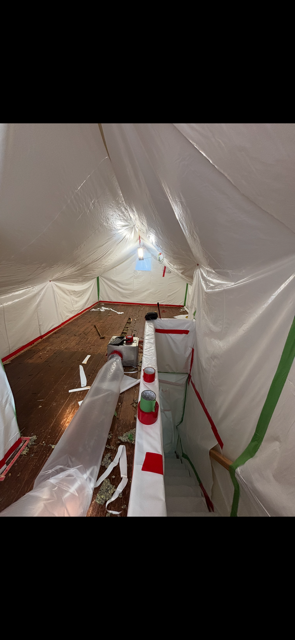
Philadelphia requires landlords of pre-1978 rental properties to obtain lead-safe or lead-free certification before renting to any household with a child under 6 years old — a requirement that goes substantially beyond what Pennsylvania state law mandates anywhere else. Philadelphia Code Chapter 6-800, the Lead Paint Disclosure and Certification Law, has been in effect since 2012 and is one of the strictest local lead paint ordinances in the state.
For landlords, the certification requirement is not optional and not deferred. For owner-occupants, the same lead hazards exist — the legal trigger is different, but the health risk is identical.
What Philadelphia’s Lead Paint Certification Law Actually Requires
Who it covers: All landlords of residential rental units in pre-1978 buildings in Philadelphia where a child under 6 years old will reside.
What it requires: Before occupancy by a household with a child under 6, the landlord must provide either:
- A lead-safe certification — confirming that lead hazards in the unit have been controlled to below hazard levels through abatement, enclosure, or encapsulation, verified by a certified lead inspector or risk assessor
- A lead-free certification — confirming that no lead-based paint is present in the unit at or above the HUD action level
Certification validity:
- Lead-safe: valid for 4 years
- Lead-free: permanent, once verified by a certified inspector
Enforcement: Philadelphia’s Department of Licenses and Inspections enforces the ordinance. Landlords who fail to provide certification can face civil penalties and are prohibited from collecting rent for the non-compliant period.
This is meaningfully stricter than the federal EPA Residential Lead-Based Paint Hazard Reduction Act, which requires only disclosure of known lead hazards to buyers and renters of pre-1978 housing — not certification that hazards have been addressed.
Why Philadelphia Has These Rules
Philadelphia’s housing stock makes the risk concrete. The Philadelphia Department of Public Health estimates approximately 95% of pre-1978 housing in the city may contain lead-based paint, and roughly 480,000 homes may have lead paint present. About 70% of the city’s housing was built before 1950 — the highest-risk era, when lead-based paint was applied at full concentration in virtually all residential construction.
The result is one of the highest childhood lead poisoning rates among major American cities. The CDC’s current blood lead reference value is 3.5 micrograms per deciliter (µg/dL) — below which no adverse health effects can be guaranteed — but the CDC and the EPA have both stated there is no known safe blood lead level in children. Lead exposure at any detectable level affects neurological development, and the effects are permanent.
Philadelphia’s certification law exists because disclosure alone does not reduce childhood lead poisoning. Certification that hazards are actually controlled does.
What Lead-Safe Certification Involves
Lead-safe certification is not the same as lead abatement. The distinction matters for both cost and scope.
Lead abatement permanently eliminates lead hazards — through removal, enclosure with new permanent surfaces, or encapsulation with an approved bonding agent. Abatement requires a PA-certified lead abatement contractor and generates a clearance report after the work is complete.
Lead-safe certification confirms that lead-based paint hazards are currently controlled below action levels — paint is stable (not peeling, chipping, or chalking), there are no bare lead-contaminated soil areas, and dust wipe samples from floors and window sills are below HUD’s hazard levels. It does not require the lead paint to be removed. It requires that it is not currently generating a hazard.
For many Philadelphia rentals, lead-safe certification is achievable through paint stabilization (encapsulant application, repainting) and cleaning — at lower cost than full abatement. But certification expires every 4 years and must be renewed. Each renewal requires re-inspection and dust wipe sampling.
Lead-free certification requires confirming through XRF testing or paint chip analysis that no lead-based paint is present at or above the detection threshold. For pre-1950 housing, this is rarely achievable without complete lead abatement of all painted surfaces — a substantial undertaking.
The RRP Rule Applies to Any Contractor Working on Pre-1978 Philadelphia Properties
Separate from the certification law, the EPA’s Renovation, Repair and Painting (RRP) Rule applies to any contractor performing renovation that disturbs painted surfaces in pre-1978 housing:
- 6 or more square feet of interior painted surface
- 20 or more square feet of exterior painted surface
Any contractor performing this work — not just a lead abatement contractor, but any renovation contractor — must be an EPA-certified Lead-Safe Certified Firm, with at least one EPA Certified Renovator on the project. This requirement applies to every pre-1978 Philadelphia property, regardless of whether it is a rental or owner-occupied.
Penalties under the RRP Rule run up to $37,500 per day per violation. For a landlord already required to maintain lead-safe certification, hiring a non-certified renovation contractor is both a regulatory violation and a direct contradiction of the certification’s premise.
What This Means for Owner-Occupied Philadelphia Homes
Owner-occupants are not subject to Philadelphia’s certification law — it applies to rental properties. But the lead hazards in owner-occupied pre-1978 Philadelphia row homes are the same. The regulatory trigger is different; the health risk is not.
If you have children under 6 in a pre-1978 Philadelphia home, the CDC’s guidance is the same as for renters: identify and control lead hazards. A lead risk assessment will characterize what’s present and where. Lead abatement or interim controls can reduce or eliminate the hazard.
If you are planning a renovation that will disturb painted surfaces — replacing windows, refinishing floors, opening walls — the RRP Rule applies to your contractor regardless of your ownership status. Confirm that any contractor you hire for a pre-1978 Philadelphia renovation holds EPA Lead-Safe Certified Firm status.
If you are buying a pre-1978 Philadelphia property, federal law requires the seller to disclose known lead hazards. You have a 10-day inspection period to conduct a lead paint inspection or risk assessment. Use it.
Before Renting or Renovating a Pre-1978 Philadelphia Property
For landlords:
- Confirm whether your unit requires lead-safe or lead-free certification before your next occupancy by a household with children under 6
- If certification is expired or not yet obtained, schedule a lead inspection or risk assessment with a certified professional
- Complete any required remediation work using a PA-certified lead abatement contractor
- Obtain clearance examination from an inspector independent of the contractor who performed the work
For owner-occupants planning renovation:
- Confirm that your renovation contractor holds EPA Lead-Safe Certified Firm status
- If significant painted surfaces will be disturbed, consider a lead inspection first to characterize what’s present
- For families with children under 6, a lead risk assessment before renovation is the lowest-risk approach
ACI-TECH, INC. provides lead risk assessments and lead remediation services in Philadelphia, Chester, and Delaware County. Contact us for a free estimate or call (610) 497-7162. For a complete overview of asbestos and lead regulations in Philadelphia, including permit requirements, see our Philadelphia asbestos and lead remediation guide.
Sources
- Philadelphia Code Chapter 6-800 — Lead Paint Disclosure and Certification Law
- Philadelphia Department of Public Health
- CDC — Blood Lead Reference Value
- EPA — Health Effects of Lead
- EPA — Renovation, Repair and Painting Program for Contractors
- EPA — Real Estate Disclosures About Potential Lead Hazards
- HUD — Lead-Safe Housing Programs
- Pennsylvania Department of Labor & Industry — Lead Certification